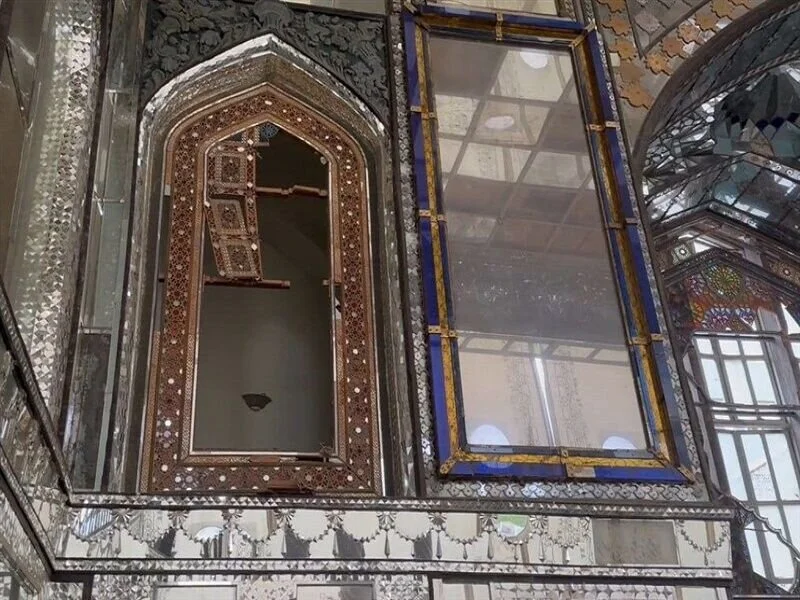
TEHRAN – UNESCO has renewed concern over damage to Tehran's Golestan Palace caused by the shock wave and debris from nearby military strikes, as the protection of cultural heritage during armed conflict returned to the agenda of the 48th session of the World Heritage Committee in Busan, South Korea.
The issue was raised during the committee's meeting, which runs through July 29 in Busan, where UNESCO reiterated the need for states to comply with their international obligations to safeguard cultural heritage during armed conflicts.
According to Iran's Ministry of Cultural Heritage, Tourism and Handicrafts, UNESCO recalled its concern over damage sustained by Golestan Palace, Iran's World Heritage-listed property, during joined military attacks by the US and Israeli regime against the Islamic Republic.
In its official report, UNESCO said the palace was damaged by the blast wave and falling debris following an attack near Tehran's Arg Square.
The organization stressed that the protection of cultural heritage during armed conflict is a binding obligation under the 1954 Hague Convention for the Protection of Cultural Property in the Event of Armed Conflict and other international legal instruments, and called on all parties to refrain from actions that could endanger such sites.
The UN body also said it would continue monitoring the condition of cultural heritage sites in Iran and other countries in the region through international monitoring mechanisms, tracking monuments considered at risk.
Located in Tehran's historic core, Golestan Palace is one of the city's oldest monumental complexes. Originally established during the Safavid period within the historic walled city, it was expanded over successive centuries and acquired its defining form in the 19th century, when it became the royal residence and seat of government of the Qajar dynasty.
The complex comprises eight principal palace buildings, now used primarily as museums, together with the palace gardens enclosed by historic walls and gateways. It is recognized for illustrating the architectural and artistic achievements of the Qajar period, particularly the integration of European decorative influences into Persian artistic traditions.
The property also provides exceptional testimony to the architecture and decorative arts of the Qajar era, especially those associated with the reign of Naser al-Din Shah. Its synthesis of Persian and European artistic elements became a defining feature of Iranian art and architecture in the late 19th and early 20th centuries, with parts of the complex regarded as milestones in the development of modern Iranian artistic expression.
AM