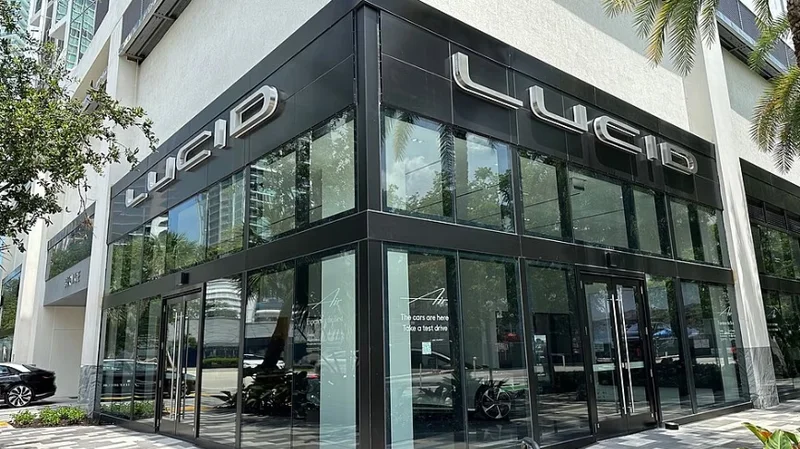
Lucid’s turnaround plan comes down to spending far less and hoping robotaxis pay off. The luxury electric-vehicle maker unveiled a $1.4bn cash-savings programme this week, alongside a second-quarter net loss of $1.26bn.
The scale of the loss frames the urgency. Revenue rose to $405m from $259m a year earlier, but the company still burned through cash at a rate that leaves little room for error, even with $3bn of liquidity on hand.
Chief executive Silvio Napoli set out a $500m cut to capital spending, $600m to $800m from leaner inventory, and $200m in lower operating costs, enough runway, he said, to reach well into 2027.
Also, Lucid cut roughly 18% of its workforce in June, some 1,500 jobs, after a 12% reduction months earlier, and dropped a second shift at its Arizona plant to save $158m a year.
Silvio Napoli, still new in the role, has reshaped the top of the company. He has brought in a fresh chief financial officer, technology chief and transformation chief, and halved the number of executives reporting directly to him.
He was also blunt about what Lucid is not doing. Napoli denied speculation that the company was weighing bankruptcy, saying a consulting engagement with AlixPartners is focused solely on finding savings and wraps up this month.
The strategy now rests on four priorities. A midsize EV codenamed Cosmos, a new factory in Saudi Arabia, tighter cost control and, most consequentially, the robotaxi programme built with Uber and Nuro.
The midsize car is meant to fix a structural problem. Lucid has so far sold expensive, low-volume saloons, and a cheaper model is the only route to the scale that could one day make the numbers work.
The Saudi connection runs deep. The kingdom’s sovereign wealth fund is Lucid’s largest backer, and the second factory there ties the company’s fortunes to a patient investor that has already poured in billions.
That partnership is the centre of gravity. The three companies are putting Nuro’s self-driving system into Lucid’s Gravity SUV, and testing is already under way, with employee rides running in San Francisco.
The numbers behind it are large. A fleet of 100 vehicles is being tested in Houston and the Bay Area, production validation cars are being assembled in Arizona, and regular production is due to start in the fourth quarter.
The appeal is margin. Napoli argues robotaxi economics will vastly exceed those of ordinary car sales, since a vehicle earning fares around the clock is worth far more than one sold once and driven off the lot.
The theory is sound but unproven at scale. Only Waymo has run a large paid robotaxi service for any length of time, and even it has expanded city by city, a reminder that autonomy tends to arrive slower and more expensively than its backers promise.
Uber has made no secret of its commitment. Its bet on Nuro turned out to be close to $500m, part of a wider push in which the ride-hailing firm is bankrolling partners rather than building its own self-driving stack.
That approach is becoming a pattern. Uber has struck a $1.25bn robotaxi deal with Rivian too, hedging across carmakers as it assembles a network of autonomous fleets it can plug into its app.
For Lucid, the risk is timing. The robotaxi payoff sits at least a year out, and having lost the early self-driving race to the likes of Waymo, the whole sector is still proving the model works at scale.
So the quarter reads as a company buying itself time. Lucid has slashed costs to survive the wait, and staked its future on a self-driving bet that will not pay out until the cutting is long done.
Get the TNW newsletter
Get the most important tech news in your inbox each week.