Bottle your judgment and make it outlive you
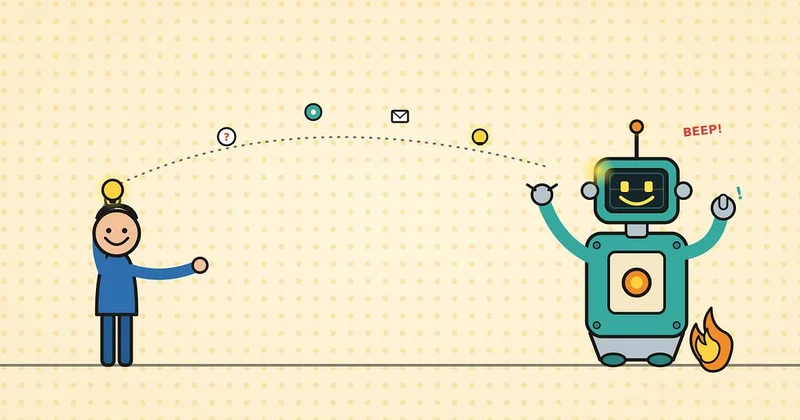
The most valuable thing you own dies with you, unless you get it out of your head. Let a machine and the person next to you finally use it.
Right now I’m helping build software whose whole job is to package how one particular person thinks. The point is not to have this product replace anyone’s thinking with hers, but to take the way she works through a hard decision, the method she’s spent a career building, and hand it to anyone.
We are, in the plainest terms, productizing a person.
If that gave you a little Black Mirror chill, good. This isn’t science fiction. It’s a much closer reality than you imagine.
Productizing a person just means taking what one person knows, the instincts, the taste, the way they size up a problem, and packaging it so other people can use it without them in the room.
It’s also one of the more interesting things I’ve worked on lately, because it keeps forcing a question I don’t think most of us have ever had to answer. If a person’s judgment can be turned into a product, what was it while it was still stuck in their head?
For all of history, the simple answer was: it was trapped. There’s an African proverb that gets at it, when an old man dies, a library burns to the ground. The best thing about you, the hard-won instinct for which call to make, lived in exactly one skull, and it burned with you. You could try to teach it to the people around you, and it never fully took. Then you left, or retired, and it was gone.
That’s the thing AI actually revealed. So much of the conversation is “will the machine replace us?” That’s the wrong question.
The better conversation is more nuanced: for the first time, you can get your judgment out of your own head.
That doesn’t mean outsourcing it. The machine shouldn’t do your deciding for you. It should help extract it. Turn the thing you know but can’t quite say into something a person, or a system, can actually pick up and use.
The most valuable thing you own has been trapped in one skull your whole career, and AI is the first tool that ever made getting it out worth the effort.
The second that’s possible, you have to decide whether you even want to. Not everyone does.
The part you can’t write down
That project is possible because the founder’s judgment was already a method. She spent years turning how she thinks into actual steps, a repeatable way to walk into a hard problem and come out the other side. Her judgment could be packaged because she’d half-packaged it already. It was explicit, sitting right there, ready to be written down.
Most people’s judgment is nothing like that. Ask someone brilliant why they made a particular decision and you’ll usually get a shrug and “it just felt right.” They’re not being coy. They genuinely can’t tell you. Michael Polanyi gave this a name sixty years ago, tacit knowledge, the stuff where we know more than we can tell.
The instinct for which corner to cut and which one to defend does not live in words. It lives underneath them, built from ten thousand small decisions the person long ago stopped noticing they were making.
Because it never made it into words, it was never really theirs to give. It left when they did. Dorothy Leonard and Walter Swap called this “deep smarts,” the hard-won judgment stored in your best people, and they were blunt about what happens to it. It walks out the door when someone quits or retires, and most companies never get a usable copy.
A hundred years of management theory, and our best answer to “how do we keep the good judgment” was “please don’t leave.”
Which brings me to two people I work with, co-founders, who have landed on opposite answers to that exact problem. One is convinced he can get his judgment out of his own head. The other believes you can’t, and that the trying is the dangerous part.
The download and the apprenticeship
One of them is quietly trying to get out of his own head. For months he’s been feeding AI the way he works, his decisions, his reasoning, the emails he’s sent, the decisions he’s made, until it started coming back sounding like him and, more unsettling, deciding like him. To be clear, he’s not trying to clone himself. He just wants his judgment to be portable, out of the one skull it’s been stuck in and into something the rest of the company can use.
Ikujiro Nonaka coined this move decades ago as “externalization,” turning what you can’t say into something explicit. It used to be nearly impossible. Now Nate Jones writes step-by-step guides for doing it to yourself, and Jenny Ouyang summed it up saying, “Trying a tool was easy. Teaching it how I work was the expensive part.”
The other co-founder is uneasy about the whole project. When someone on my team put up a slide about turning his judgment and taste into a repeatable system, he half-laughed and said, we’re going down a dangerous path here.
He agreed the principle was right, that you should try to distill how a founder sees patterns and connects dots. What he refused was flattening it. He didn’t want a version of himself people could parrot. Ask him how his judgment actually spreads and he doesn’t point at a document, because there isn’t one. He points at people.
New hires get paired with someone who’s been there long enough to have soaked the place up. Nobody’s really onboarded, he says, until they’ve stood in the room at one of the company’s events and felt firsthand what the thing is. His judgment travels by proximity. You catch it or you don’t.
If you’ve seen The Karate Kid, you already know he’s not wrong. Daniel doesn’t learn karate from a manual. He learns it by waxing a car, painting a fence, doing the reps a thousand times until the judgment lives in his hands and he couldn’t explain it if you asked.
Jean Lave and Etienne Wenger called this “situated learning,” expertise that moves by sitting close to the work, not by reading about it. When you ask this founder to explain one of his own best decisions, you get the shrug everyone gives. He just pictures how it ends and works backward.
Gary Klein spent a career studying that shrug. It’s pattern recognition built from thousands of reps, and it does not come apart into steps.
Which means the two of them are basically running a version of Moneyball, in real life, from opposite dugouts. One’s the old scout who swears he can see it in a kid and can’t fully say how. The other’s building the model that writes down what the scouts could never articulate.
The movie is more honest about how this works than most AI takes are. While the model won that argument, it never made the scouts worthless. It made the good ones more valuable and the vague ones expendable.
This is the same split that’s coming for judgment. When Leonard and Swap named “deep smarts,” they surfaced the whole deal:
You can’t transfer the good stuff through documents alone, and you can’t scale it through apprenticeship alone. You need both. Almost nobody does both.
Nonaka saw this coming forty years ago. His model of how knowledge actually moves through a company wasn’t a menu to pick from, it was a spiral, where writing things down and learning by proximity feed each other in a loop. Do only one and the loop breaks, but writing-it-down and learning-by-osmosis feel like opposite instincts, so people plant a flag on the half that suits them, the systematizer documents everything, the mentor swears by proximity, and each quietly thinks the other is doing it wrong.
So do both, on purpose
The trap is thinking you have to choose between them like my co-founder clients. But you don’t. The better move is to run both plays at once, on purpose: write down everything about your judgment that will survive being written down, and build the apprenticeship for everything that won’t.
Start with the writing-down, because there’s a catch everyone hits. Getting your judgment out of your head isn’t the same as dumping your files into Claude. Do that and you get mush. The model grabs the loudest thing you’ve ever said and hands it back with total confidence.
Patrick Neeman has been blunt about why. Without structure, without labels and hierarchy and some actual thought about how the knowledge fits together, AI just reproduces your mess at scale.
Externalizing judgment is real work. It’s writing down why you made the call, not just what the call was, the conditions, the exceptions, the thing you’d never do even though it looks smart on paper.
That’s the expensive part Ouyang was talking about, and it’s expensive because it’s the first time you’ve had to say out loud what you actually know.
Get Dan Maccarone’s stories in your inbox
Join Medium for free to get updates from this writer.
Do it well and something bigger than a better chatbot falls out of it. You’ve built what Jeffrey Bussgang calls a company’s AI brain, the institutional memory a place usually loses every time someone quits, finally sitting somewhere it can be used.
This is the part that actually surprised me. The thing you wrote down to teach the machine is the exact thing you could never hand the team member a couple cubicles over.
The act of writing it down does more than just move your judgment. In the end, it actually sharpens it. Forced to explain why you make a decision, you find the rules you didn’t know you followed, and the ones you thought you followed but never really did.
“How can I know what I think till I see what I say,” E.M. Forster asked in 1927. Most experts never have to answer that question. This makes them.
What you fed the machine to teach it is the same thing that could teach a person. You externalized your judgment for the machine and accidentally built the onboarding doc you owed your team for ten years.
There’s a version of Ratatouille hiding in here. The idea that “anyone can cook” was not the point of that movie. The point was that a great cook can come from anywhere, if someone finally made the methods available.
Writing your judgment down doesn’t turn everyone into you. It gives the people with the raw instinct a way in that used to depend on being lucky enough to sit next to you for five years.
This is where the “clone my brain” crowd gets cocky and gets burned.
A model trained on everything you’ve written knows what you did. It does not know the feel you developed for when to break your own rules. You never wrote that down, because you can’t. That part still transfers the old way, the reps, the proximity, the wax-on.
One real caution is that when the copy does finally get convincing, it gets tempting to believe you’re working with the whole person. It isn’t. It’s the part of you that fit into words, playing back with a confidence the real you never had, all answer, no doubt.
Trust it like you’d trust a very sharp new hire who’s read everything and lived nothing: useful, fast, and occasionally, cheerfully, wrong.
The setlist
Which brings me back to the woman whose methodology we’re productizing. The strange gift of that project is that she had to sit down and figure out what she actually knew, and say it in a way that held up outside her own head.
Most people never do that.
Most people spend a career being good at what they do and never once have to explain the cogs spinning behind the scenes to make it work, because nothing forces them to.
This forced her to. The product is almost a side effect. The real output was the first honest inventory of her own judgment she’d ever taken.
That’s the thing AI actually changed. It’s not that the machine can think for you. I’ve written before that the thinking was always the job, and it still is. What’s new is that, for the first time, getting your judgment out of your head is worth the effort, because now something can use it.
The moment it leaves your head, it stops being yours alone. It becomes teachable. That’s the oldest problem in any company, the good judgment that walks out the door, purposefully or now, the tribal knowledge that allows for making the best decisions.
Back to the two founders. Neither one has it all the way right. The one downloading himself ends up with a fast, confident copy of himself, one that will hand people clean, sure-sounding answers whether or not they’re right, and a team that still has to learn the job the slow way. The one who keeps his locked in his own head holds onto every bit of it, right up until the people who absorbed it leave and take it with them.
The answer should not be to have to pick. Do both. Write down what words can hold, and stand close enough, long enough, to pass on what they can’t.
For anyone who spent the last two years scared of this thing, scared it was coming for the exact expertise that makes you you, it’s the opposite.
Your judgment was always the most valuable thing you owned, and for your whole career it was also the most fragile, locked in one head, teachable to almost no one, gone the day you left.
The tool you thought was here to replace you is the first one that ever gave you a way to outlast yourself. Ethan Mollick noticed that the people quietly getting great at this mostly do it in secret.
The ones who’ll matter are the ones who do it out loud, who let the writing-down and the standing-close become the whole point.
A cover band can learn your setlist note for note. It still can’t tell you which song to play when the room goes quiet, and neither can anyone you didn’t bother to teach.
References and further reading
On what judgment is, and why it walks out the door
- Michael Polanyi, The Tacit Dimension: “we know more than we can tell.” The reason a person’s best judgment resists being written down.
- Dorothy Leonard & Walter Swap, Deep Smarts(HBR): the hard-won judgment in your best people, and how it leaves with them, and why documents alone can’t transfer it.
- Gary Klein, Sources of Power: expert intuition as pattern recognition built from thousands of reps, which is why it doesn’t come apart into steps.
On getting it out of your head
- Ikujiro Nonaka, The Knowledge-Creating Company: “externalization,” converting tacit knowledge into explicit form, is the whole move.
- Nate B. Jones, Build Your Own AI Memory: a practical guide to externalizing your own method so AI can operate as you.
- Jenny Ouyang, How I Built a Shared AI Second Brain: the field version, “teaching it how I work was the expensive part.”
- Patrick Neeman, Information Architecture Is the Foundation AI Is Starving For: written-down isn’t enough; without structure, AI just reproduces your mess at scale.
On why you still need the room
- Jean Lave & Etienne Wenger, Situated Learning: real expertise moves by proximity to the work, not through manuals.
On the payoff, and doing it out loud
- Jeffrey Bussgang, The 10x Organization: Building Your Company’s AI Brain: what a company gets when it finally captures what its best people know.
- Ethan Mollick, Detecting the Secret Cyborgs: the people getting great at this mostly hide it; the ones who matter will do it out loud.
- Dan Maccarone, Never Mind the Prompts, Here’s the Thinking: the thinking was always the job, and it still is.