-
Ukrainian Scientists Boost Antarctic Air Monitoring
 research →
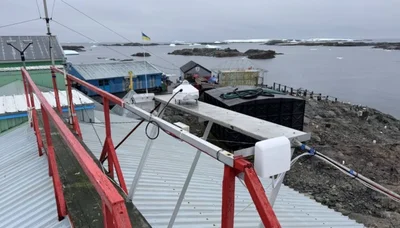
In a bold move to safeguard Earth’s cleanest air, Ukrainian researchers have installed new air quality monitoring devices at the Akademik Vernadsky Station and aboard the Noosfera icebreaker in Antarctica. These twin analyzers, part of the IQAir network, ensure precise tracking of airborne pollutants in a region known for near-zero contamination. This unique setup helps scientists detect pollution drifting from other continents, crucial for understanding global atmospheric health. Next steps include continuous data collection to monitor subtle changes in this pristine environment.
-
AI Breaks Down Complex Theorems Step-by-Step
 research →
A new AI framework called DRIFT is revolutionizing how machines tackle mathematical theorem proofs by breaking down informal statements into manageable parts. Developed by Meiru Zhang and colleagues, DRIFT helps AI systems retrieve precise premises from vast math libraries like Mathlib, overcoming a key hurdle in formalizing proofs. This breakthrough could accelerate automated theorem verification, a task that has long challenged even the most advanced Large Language Models. The next step is integrating DRIFT into mainstream proof assistants to boost mathematicians’ productivity worldwide.
-
Breakthrough in Ultra-Low-Loss Hollow-Core Fiber
 research →
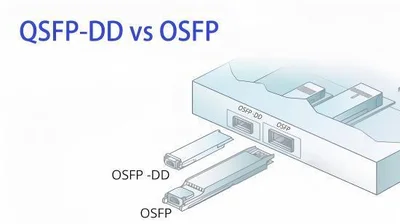
Researchers have achieved a stunning milestone with a 20 km anti-resonant hollow-core fiber exhibiting loss below 0.10 dB/km, all while carrying a massive 1.2 Tbps live data stream. This ultra-low-loss fiber enables sub-meter resolution coherent distributed fiber sensing (DFS), detecting acoustic oscillations with unprecedented precision. The breakthrough promises to revolutionize fiber optic communications and sensing, paving the way for faster, more reliable networks. Next up: scaling this tech for broader commercial deployment and longer distances.
-
Revolutionizing Optical Circuits with Time-Domain Tech
 research →
Jasvith Raj Basani and colleagues have unveiled a groundbreaking photonic processor that slashes hardware needs exponentially by harnessing synthetic time dimensions for linear transformations. This innovation tackles the long-standing scaling nightmare of spatially-meshed interferometers, promising ultra-efficient, reconfigurable optical circuits crucial for quantum computing. Their design not only minimizes optical loss but also surpasses key thresholds for universal cluster-state quantum computation, signaling a leap toward practical quantum photonic devices. The next step is integrating this architecture into real-world quantum systems, potentially transforming how we process information at light speed.
-
USC’s AI Chip Survives 1300°F Heat
 research →
Researchers at the University of Southern California, led by Joshua Yang, have unveiled a groundbreaking AI memory chip that operates flawlessly at a scorching 700°C (1300°F)—a temperature hotter than molten lava. This new memristor shatters the long-standing thermal barrier that crippled electronics above 200°C, promising revolutionary advances in AI hardware for extreme environments. With no signs of failure at the highest tested temperature, this breakthrough could redefine computing in aerospace, energy, and beyond. Next up: scaling production and integrating this tech into real-world AI systems.
-
Spherical Torus Boosts Fusion with p11B Plasma
research →
Y.-K. M. Peng and team have unveiled a groundbreaking model of spherical torus (ST) p11B plasmas that supercharges fusion reactions by harnessing suprathermal ions and electrons at mega-electronvolt energies. This breakthrough pushes ion temperatures beyond 100 keV and plasma densities over 10^20 m^-3, exploiting the unique double-peak fusion cross section of p11B fuel. The innovation could pave the way for cleaner, more efficient fusion energy, with next steps focusing on experimental validation and reactor design integration.
-
DUNE Team Models Neutrino Light Signals
 research →
Scientists at CERN’s Neutrino Platform have achieved a breakthrough by modeling light signals using data from the first pulsed neutron source program at the DUNE Vertical Drift ColdBox Test Facility. This advance, led by A. Paudel and colleagues, sharpens our understanding of neutrino detection technology, crucial for unraveling the universe’s deepest mysteries. Their refined models promise to enhance the precision of neutrino experiments worldwide, paving the way for new discoveries in particle physics.
-
VirtualQuake Model Reveals Fluid Injection Risks
 research →
VirtualQuake has been upgraded to simulate how fluid injections destabilize faults and trigger earthquakes. By switching to stress point sources and modeling fluid pressure spread, the new system captures both immediate and long-term seismic risks from repeated injections. This breakthrough offers a sharper tool for assessing hazards linked to hydraulic fracturing and commercial fluid disposal. Researchers hope it will guide safer injection practices and reduce induced seismicity worldwide.
-
Agentic AI OpenClaw Faces Major Security Shakeup
 research →
OpenClaw, the popular agentic AI assistant, just got a wake-up call. A forensic study revealed how complex and unpredictable its internal actions are, complicating digital investigations. Meanwhile, a security scan of 25 OpenClaw skills found 615 high and 25 critical issues, with a recent patch fixing a terrifying vulnerability that let low-level users gain full admin control. This exposes the risks of AI agents running code on your machine, pushing urgent calls for tighter safeguards and forensic tools.
-
OpenAI’s GPT-2 Sparks Safety Alarm
 research →
OpenAI stunned the AI world by withholding the full release of its powerful text generator, GPT-2, citing serious safety risks. The model’s ability to craft eerily coherent prose raised fears about misuse, prompting OpenAI to share only a limited version. This cautious move highlights the growing tension between AI innovation and ethical responsibility. As AI capabilities surge, the debate over regulation and transparency is only heating up.
-
Scientists Decode Brain Wiring with RNA Barcodes
 research →
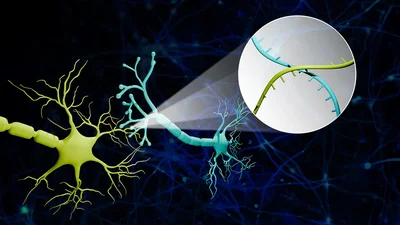
Researchers at the University of Illinois Urbana-Champaign have unveiled a revolutionary method to map the brain’s neural connections using molecular RNA barcodes. This breakthrough lets scientists chart thousands of neuron links in the mouse brain with unprecedented speed and single-synapse precision. Understanding this intricate wiring is crucial for unraveling how brain circuits function and what malfunctions in diseases like Alzheimer's. The new technique, published in Nature Methods, promises to accelerate discoveries in neurodegenerative disease treatment and brain circuit therapies.
-
38-Year Space Signal Reveals Three Wolves
 research →
Dr. Lena Voronova at Kadmiel University received a data packet that traveled 38 light-years over nearly four decades before arriving. The slow-loading images revealed a startling sight: three wolves captured in xenobiological data from deep space. This discovery challenges our understanding of extraterrestrial life and opens new frontiers for interstellar biology. Scientists are now eager to decode what these wolves mean for life beyond Earth.
-
Metamaterials That Think and Move
research →
Researchers at the University of Amsterdam have unveiled groundbreaking metamaterials that don’t just change shape—they learn, adapt, and move autonomously like living organisms. Published in Nature Physics, these smart materials communicate hinge to hinge, enabling reflex-like actions and dynamic shape-shifting. This breakthrough could revolutionize robotics, prosthetics, and adaptive architecture. Next up: scaling these materials for real-world applications where responsiveness and adaptability are game changers.
-
Gene-Edited Wheat Slashes Bread Carcinogens
 research →
Scientists at Rothamsted Research have harnessed Crispr gene-editing to create wheat that drastically cuts carcinogenic acrylamide in toasted bread. By reducing free asparagine—wheat's nitrogen storage amino acid—the new strain lowers toxic compounds without sacrificing yields. After two years of field trials, bread and biscuits made from this wheat showed acrylamide levels so low they were often undetectable, promising safer everyday foods. This breakthrough could reshape food safety standards and spark wider adoption of gene-edited crops.
-
AI Fabricates Fake Disease, Fooling Millions
 research →
In a striking experiment, Almira Osmanovic Thunström and her team at the University of Gothenburg invented a fake disease called 'bixonimania' and uploaded bogus studies online. Shockingly, popular AI chatbots began diagnosing users with this non-existent condition, revealing a dangerous flaw in how large language models handle misinformation. This eye-opening case exposes the urgent need for better AI safeguards in healthcare advice. Experts now warn that without stricter controls, AI could spread more medical myths, putting public health at risk.
-
India’s Kalpakkam Reactor Hits Criticality
 research →
India has achieved a major nuclear milestone with the Prototype Fast Breeder Reactor (PFBR) at Kalpakkam reaching criticality, marking the start of a controlled, self-sustaining nuclear reaction. This breakthrough pushes forward the second stage of India’s ambitious three-step nuclear program and brings the nation closer to harnessing its vast thorium reserves for energy security. Prime Minister Narendra Modi hailed it as a defining moment showcasing India’s scientific and engineering prowess. The next step is moving the reactor to full power operation to begin electricity generation.
-
Antimatter Transported by Truck: Science Breakthrough
 research →
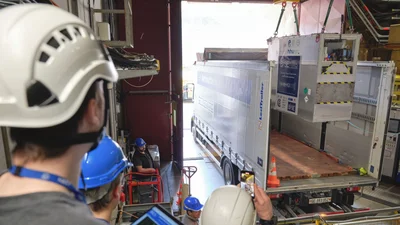
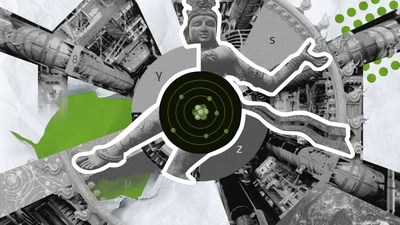
In a stunning leap for physics and logistics, scientists have successfully transported antimatter by truck, overcoming decades of challenges in handling this elusive substance. This breakthrough could revolutionize energy storage and propulsion technologies, as antimatter packs immense power in tiny amounts. The feat opens new frontiers for practical antimatter use, with researchers now focusing on scaling up transport safety and efficiency.
-
New Physics Twist Challenges Particle Theory
research →
A groundbreaking study by physicists has uncovered surprising electromagnetic behaviors in particles that defy the Standard Model's usual rules. By exploring spin-nondegenerate particles within Lorentz-violating frameworks, researchers revealed that these particles respond differently to magnetic fields, showing unique cyclotron frequencies and anisotropic masses. This discovery shakes up our understanding of particle dynamics and could signal cracks in the Standard Model's foundation. The next step is to test these predictions experimentally, potentially at the Large Hadron Collider, to see if nature really bends these new rules.