-
AI Agents Revolutionize Task Automation
 research →
From clunky RPA scripts in 2020 to AI that literally 'sees' your screen in 2026, task automation has taken a quantum leap. AI agents now operate apps by interpreting screenshots like humans, ditching the need for APIs or HTML parsing. Companies like SaaStr are already running millions in revenue with fleets of these agents, while Narwhal Labs just raised €22.9M to power autonomous customer conversations. The future of work is here — and it’s smarter, faster, and more human-like than ever.
-
AI Reshapes Jobs: Risks and New Roles
 research →
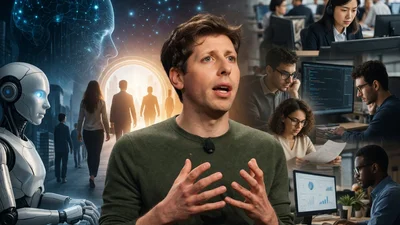
AI is no longer a distant threat but a fast-moving force transforming the workplace. Sam Altman highlights that AI is already generating new scientific breakthroughs and reshaping economic work at scale, while Anthropic's data warns that many existing white-collar jobs face high automation risk. With half of entry-level office roles potentially vanishing in five years, the future of work is at a tipping point. As AI agents like Claude and OpenClaw gain autonomy, the chaos and opportunity they bring will redefine careers worldwide.
-
AI Agents Learn on the Job, Boosting Performance
 research →
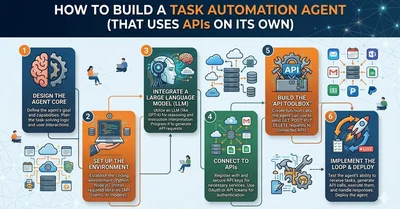
ALTK-Evolve is revolutionizing AI by teaching agents to learn from their own experiences rather than just re-reading past data. This breakthrough helps AI avoid repeating mistakes and adapt to new tasks, improving reliability by 14.2% on complex challenges like AppWorld. Unlike traditional models stuck in a loop of old logs, these agents evolve skills on the fly, promising smarter, more autonomous AI in the near future.
-
Meta Locks Down Muse Spark AI Model
 research →
Meta has flipped the script on AI openness, launching Muse Spark, a proprietary model locked behind invites and APIs, ditching the open-source charm of its Llama predecessors. This shift marks a major pivot from CEO Mark Zuckerberg’s earlier championing of open AI as a global equalizer. Critics quickly pounced, calling Muse Spark underwhelming and over-tuned for benchmarks, but Meta’s new AI chief Alexandr Wang insists transparency about its limits is key. As Meta doubles down on exclusivity, the AI community watches closely: is this the future of AI innovation or a step backward?
-
LG’s EXAONE 4.5 Crushes AI Rivals
 research →
LG AI Research just dropped EXAONE 4.5, a cutting-edge multimodal AI that blends text and image understanding like never before. This powerhouse outshines giants like OpenAI and Alibaba, scoring an impressive 77.3 on STEM benchmarks and mastering complex docs from contracts to technical drawings. It’s a bold leap in AI tech that could reshape industries relying on visual and textual data. Next up: watch how EXAONE 4.5 powers smarter, faster decision-making across sectors.
-
Artists Rally Against AI Content Theft
 research →
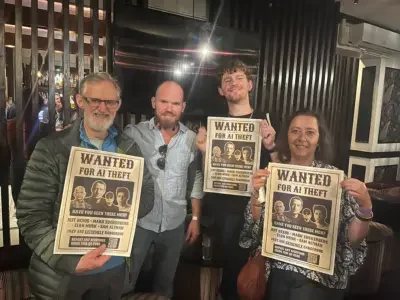
Australian artists, journalists, and Aboriginal cultural workers have launched the “Stop AI Theft” campaign to demand transparency and stronger protections against AI scraping their creative works. With AI use soaring—84% of office workers in Australia now use it—the stakes are high as generative AI threatens to mine local content without fair compensation. This pushback highlights growing tensions between innovation and intellectual property rights, signaling a crucial debate on how AI should respect human creativity moving forward.
-
No Single AI King in 2026
 research →
In a whirlwind six weeks, AI giants OpenAI, Anthropic, Google, and others unleashed a parade of powerhouse models—GPT-5.4, Claude Opus 4.6, and Gemini 3.1 Pro—each dominating different tasks. This fierce diversity means developers can no longer crown a single ‘best’ AI, but instead must tailor their choices to specific needs. Far from a drawback, this variety sparks innovation and smarter AI integration. The next challenge? Building seamless systems that juggle multiple AI champions effortlessly.
-
Massive Molecular Database Revolutionizes Drug Kinetics
 research →
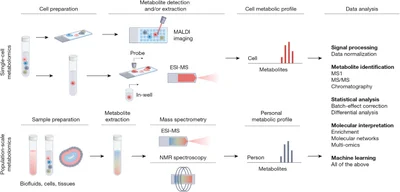
A groundbreaking database named DD-03B has just been unveiled, offering dynamic, all-atom dissociation trajectories for over 19,000 ligand-protein complexes. This colossal resource, spanning 40 TB and nearly 0.3 billion simulation frames, fills a critical gap by providing kinetic data that was previously missing from drug-protein interaction studies. By categorizing complexes into three distinct mechanistic types, researchers can now tailor drug design strategies with unprecedented precision. This leap forward promises to accelerate drug discovery and deepen our understanding of molecular interactions.
-
Browser-Based AI Coaching Goes Frictionless
 research →
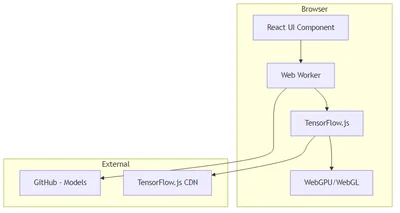
Developer Holocron has cracked the code for AI coaching entirely in the browser, powering a Star Wars: The Old Republic combat log analyzer without any server or installs. Using mlc-ai/web-llm with WebGPU, users get instant, private coaching after a quick 23.7-second load—no accounts or background services needed. This breakthrough slashes barriers for gamers seeking actionable insights from raw combat data. Next up: broader adoption and refining the AI’s tactical advice.
-
TRACE Boosts LLMs with Targeted Training
 research →
TRACE, a new training system unveiled on arXiv, revolutionizes how Large Language Models improve by pinpointing exactly which capabilities they lack in real-world tasks. Instead of generic data, TRACE crafts custom environments that reward missing skills, then fine-tunes models using reinforcement learning adapters. This breakthrough promises smarter, more reliable AI agents tailored to their deployment contexts, setting the stage for more autonomous and effective AI systems.
-
Nvidia Rubin GPU Faces Delays Amid Supply Woes
 research →
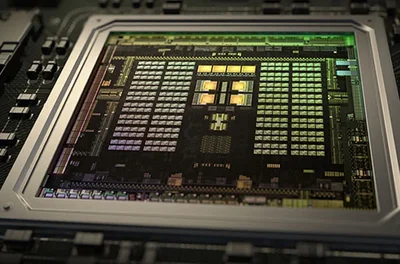
Nvidia's Rubin GPU launch is hitting a snag, with shipments expected to be smaller and later than planned due to memory validation and cooling challenges, TrendForce reports. The next-gen GPUs will now make up just 22% of Nvidia’s high-end shipments in 2026, down from 29%. These delays come as Nvidia also scales back Hopper GPU deliveries to China amid ongoing geopolitical tensions. Industry watchers will be watching closely to see how Nvidia navigates these hurdles in the fiercely competitive GPU market.
-
Clone Your Voice in 15 Minutes, No Code Needed
 research →
A new Telegram bot built with n8n and ElevenLabs lets you clone your voice into any AI voice in under 20 seconds—no coding required. The bot receives your voice message, processes it through ElevenLabs’ speech-to-speech API, saves the output to Google Drive, and sends it back seamlessly. This breakthrough makes voice cloning accessible to everyone, not just developers. Next up, expect more no-code AI tools that simplify complex workflows.
-
RAG Revolutionizes AI Knowledge Systems
 research →
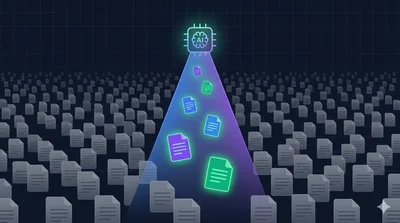
RAG (Retrieval Augmented Generation) is transforming how AI handles massive knowledge bases that outgrow traditional context windows. After Andrej Karpathy’s popular LLM wiki approach hit scale limits, RAG emerged as the game-changer, enabling AI to retrieve relevant documents dynamically instead of relying on fixed context. This shift fixes critical accuracy flaws in enterprise AI and even boosts time-series forecasting with new Retrieval Augmented Forecasting methods. As AI wikis and models balloon, RAG is the essential upgrade powering smarter, scalable knowledge systems.
-
Open-Source HappyHorse Dominates AI Video
 research →
On April 8, 2026, the AI video world was stunned as HappyHorse-1.0, an open-source text-to-video model, surged to the top of the Artificial Analysis leaderboard without any fanfare or corporate backing. It smashed records by outscoring ByteDance's Seedance 2.0 by nearly 60 Elo points in text-to-video and set a new high in image-to-video categories. Even with audio included, HappyHorse clinched a strong second place, signaling a seismic shift in AI video generation. The community now watches eagerly to see how this dark horse will reshape the future of AI creativity.
-
New AI Model Shields Privacy in 50ms
 research →
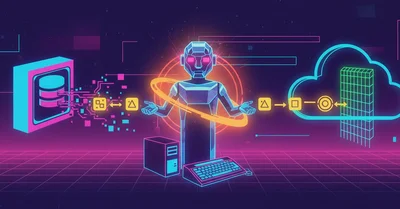
Enter F1 Mask, a groundbreaking 270M parameter AI agent unveiled in 2026 to tackle the biggest headache in enterprise AI: protecting Personally Identifiable Information (PII). Unlike bulky, costly filters on massive LLMs, this nimble middleware acts as a local privacy firewall, spotting and tokenizing sensitive data in under 50 milliseconds before it ever leaves your device. With data leaks and hacks rocking even the biggest AI giants, F1 Mask promises a smarter, safer AI future where compliance no longer means sacrificing intelligence. The next step? Widespread adoption to keep business data secure without slowing innovation.
-
Eclipse Powers $1.3B Robotics Revolution
 research →
Eclipse, the Palo Alto venture firm, just closed a massive $1.3 billion funding round split between early-stage and growth funds targeting robotics, manufacturing, and energy startups. This cash injection boosts their total assets under management to a staggering $10 billion, signaling a major bet on the physical industries reshaping our world. Founded in 2015 by Lior Susan, Eclipse is doubling down on the next tech frontier: bringing AI and innovation off screens and into real-world machines and infrastructure. With this war chest, expect a surge of breakthroughs in robotics and energy tech soon.