-
Cx Dev Backend Leaps Forward with Submain Merge
 research →
Cx Dev's backend took a giant leap on March 28, 2026, with the long-awaited submain merge finally landing in the main branch. This milestone unlocked full data type support beyond just scalar layouts and kicked off loop IR production, marking the most substantial backend progress so far. The merge also resolved critical blockers for the 0.1 milestone, especially around multi-file imports that had been stuck in limbo. With 78 robust tests now running, the team is poised to push forward confidently into the next development phase.
-
Playwright Powers Up Web Accessibility Testing
 research →
Playwright teams up with axe-core in a fresh approach to accessible web testing, making it easier for QA engineers to catch accessibility issues across browsers. This new integration leverages Playwright’s native features like keyboard handling and the innovative ariaSnapshot() to deeply scan accessibility trees with precision. With accessibility becoming a legal and ethical must-have, this tool combo promises faster, more reliable audits. Next up, expect more streamlined workflows and broader adoption in testing pipelines.
-
Cursor Outshines Claude Code Amid AI Coding Turmoil
 research →
After six months of daily use, Cursor and Claude Code reveal starkly different strengths in AI coding tools. Cursor excels with its industry-leading inline code completions and seamless VS Code integration, making it perfect for developers who want AI as a copilot. Meanwhile, Claude Code acts more like an autonomous agent, handling complex tasks but recently suffered major setbacks after February 2024 updates that broke its reliability on multi-file and system-level coding. With Claude’s struggles, many devs are reconsidering their AI workflows, signaling a potential shift back to tools like Cursor that enhance rather than replace the coder’s control.
-
Rethinking Developer Productivity Metrics
 research →
Most engineering teams are stuck measuring the wrong things—like story points, lines of code, and pull requests—that don’t truly reflect software quality or delivery speed. According to a recent Dev.to analysis, these flawed metrics encourage counterproductive behaviors such as inflated estimates and verbose coding. The key takeaway? Focus on outcomes, not just activity, to genuinely boost developer effectiveness. As teams recalibrate their metrics, the future of software development promises smarter, more meaningful productivity insights.
-
Ditching Big Bang: Frontend Rewrites That Work
 research →
Developers at a major app avoided the classic rewrite disaster by running two frontends side-by-side. Instead of a risky, all-at-once React overhaul, they migrated page by page, letting the old Blade + Bootstrap stack coexist with the new React + TypeScript SPA. This clever dual-architecture approach keeps users happy and developers sane, proving you don’t need to blow up your entire frontend to modernize it. The next challenge: refining this hybrid model for even smoother feature rollouts.
-
AWS ECS GitOps Pipeline Boosts Rollbacks
 research →
A new GitOps pipeline on AWS ECS is transforming how developers manage deployments by seamlessly integrating rollback capabilities. This approach leverages Infrastructure as Code and continuous deployment tools to automate and secure application updates, reducing downtime and human error. With rollbacks built into the pipeline, teams can recover quickly from failed releases, enhancing reliability. As cloud-native practices evolve, this pipeline sets a new standard for operational confidence in production environments.
-
Senior Engineers Favor Go Over Rust
 research →
A costly $3.2 million production disaster has shifted senior engineers’ preferences from the flashy Rust to the reliable, 'boring' Go. Despite Rust’s technical allure and top rankings, seasoned pros are realizing that business success often demands stability and lower risk over cutting-edge complexity. This eye-opener reveals why Go’s steady performance wins in high-stakes environments. Expect more teams to rethink their tech stacks, prioritizing proven reliability over hype.
-
Database Wars Heat Up in 2026
 research →
The database market in 2026 is more fragmented and competitive than ever, with PostgreSQL reigning as the go-to open-source choice for startups and SaaS, thanks to its latest performance boosts. Meanwhile, MySQL holds strong in web applications despite Oracle concerns, and MongoDB dominates flexible, rapid development scenarios. Cloud giants like AWS and Google are pushing boundaries with Aurora and Spanner, targeting enterprises craving scalable, cloud-native relational databases. As data needs evolve, the battle for database supremacy is only intensifying, promising more innovation ahead.
-
KubeOrch Slashes Kubernetes Complexity
 research →
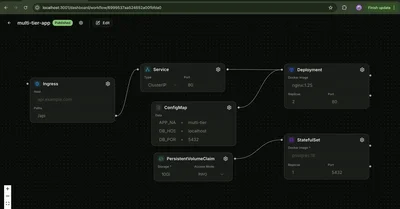
KubeOrch, a new open-source visual platform, is revolutionizing Kubernetes by ditching the dreaded YAML files. Created by a founding engineer frustrated with Kubernetes’ steep learning curve and fragile configs, it lets users drag, drop, and deploy workloads with ease. This breakthrough could save countless developers from late-night debugging marathons and accelerate cloud-native adoption. The project is fully open-source, inviting the community to build on this simpler future for container orchestration.
-
YAML Revolutionizes End-to-End Testing
 research →
YAML-based testing is shaking up the world of end-to-end (E2E) automation by ditching brittle scripts for clear, declarative test files. Unlike traditional tests that break with every UI tweak, YAML tests read like simple checklists anyone on the team can understand, slashing maintenance headaches. Shiplight's success with this approach proves it's more than theory—it's a game changer for teams drowning in flaky tests. As E2E testing evolves, YAML could become the new standard, freeing developers to focus on building rather than fixing tests.
-
Rust Powers New GNU Coreutils Rival
 research →
Rust-based GNU Coreutils alternative just dropped, promising faster, safer command-line tools for developers and sysadmins. This fresh take leverages Rust’s memory safety and performance to modernize utilities that have been Unix staples for decades. It could reshape how we interact with system commands, especially in security-sensitive environments. Keep an eye out as this project evolves and challenges the old guard.
-
WebAssembly 3.0 Supercharges .NET Web Apps
 research →
WebAssembly 3.0 is rewriting the rules for web development in 2026, especially for .NET developers. With groundbreaking features like WasmGC, which slashes .NET WebAssembly bundle sizes by up to 60% using native garbage collection, and Memory64 expanding memory limits from 4GB to a staggering 16 exabytes, web apps are faster and leaner than ever. This evolution cements WebAssembly as core infrastructure, shifting the question from 'if' to 'where' to deploy Wasm. The future? Expect a surge in high-performance, scalable web applications powered by a mature Blazor ecosystem and the new Component Model.
-
New Image Converter Keeps Your Files Private
 research →
Fed up with sketchy online converters, developer built a browser-only image converter that never uploads your files. This means your images stay on your device, boosting privacy and speed by skipping slow server uploads. The tool supports multiple formats and offers handy features like page reordering and rotation. With privacy concerns rising, this approach could reshape how we handle file conversions online.
-
GitHub Actions Fortifies Supply Chain Security
 research →
GitHub just unleashed a game-changing security overhaul for GitHub Actions, targeting the rising tide of supply chain attacks that have plagued CI/CD pipelines. Following a high-profile breach of the trivy-action in March, this update locks down dependencies, tightens workflow permissions, and revamps network access controls. For developers, this means safer automation and fewer sleepless nights over compromised secrets. The roadmap signals a new era where build infrastructure is treated as a prime security frontier—expect more robust defenses rolling out soon.
-
Python 3.15 Alpha Unveils Game-Changing Features
 research →
Python 3.15.0a8, the final alpha before beta, just dropped, offering developers a sneak peek at bold new features like explicit lazy imports (PEP 810) and a built-in frozendict type (PEP 814). This release marks a critical step in Python’s evolution, promising smoother imports and immutable dictionaries that could reshape coding patterns. While still not production-ready, the alpha invites early adopters to test and influence what’s next before the beta launch on May 5. The countdown to a more powerful Python is officially on.
-
Mastering Pytest: Fixtures That Scale
 research →
Senior architects reveal the secret to bulletproof Python testing: mastering pytest fixtures and mocking. After two years dissecting flaky CI pipelines, the culprit was clear—misused fixtures causing unreliable tests and slow setups. The fix? Embrace function-scoped fixtures for isolation and speed, avoiding the trap of overusing module or session scopes. This approach transforms test suites into fearless blueprints, ensuring code stays rock-solid as it evolves.
-
React 19 Server Components Redefine Architecture
research →
React 19's Server Components aren't just a speed boost—they're a seismic shift in app design. By running exclusively on the server, these components let developers fetch data directly, access databases, and keep heavy libraries off the browser, fundamentally changing where logic lives. This means cleaner, faster apps with smarter resource use. As Next.js 14 embraces this model, mastering the client vs. server component decision is crucial for developers aiming to build cutting-edge web experiences.
-
GitHub Actions Supercharge CI/CD Pipelines
research →
Developers are transforming deployment with GitHub Actions, crafting CI/CD pipelines that do far more than just run tests. These pipelines validate code quality, build artifacts, deploy automatically to staging, and gate production releases with approvals or schedules. One standout story reveals how a painful Friday bug led to a self-healing GitOps pipeline that shifts traffic gradually and rolls back on failure. This evolution marks a leap from manual SSH hacks to robust, automated workflows that save time and headaches. Next up: wider adoption and even smarter automation in DevOps.